
Side Table
Linnell, William
1755 – 1760
top. H. 99; L. 170

Qing dynasty, Kangxi Reign
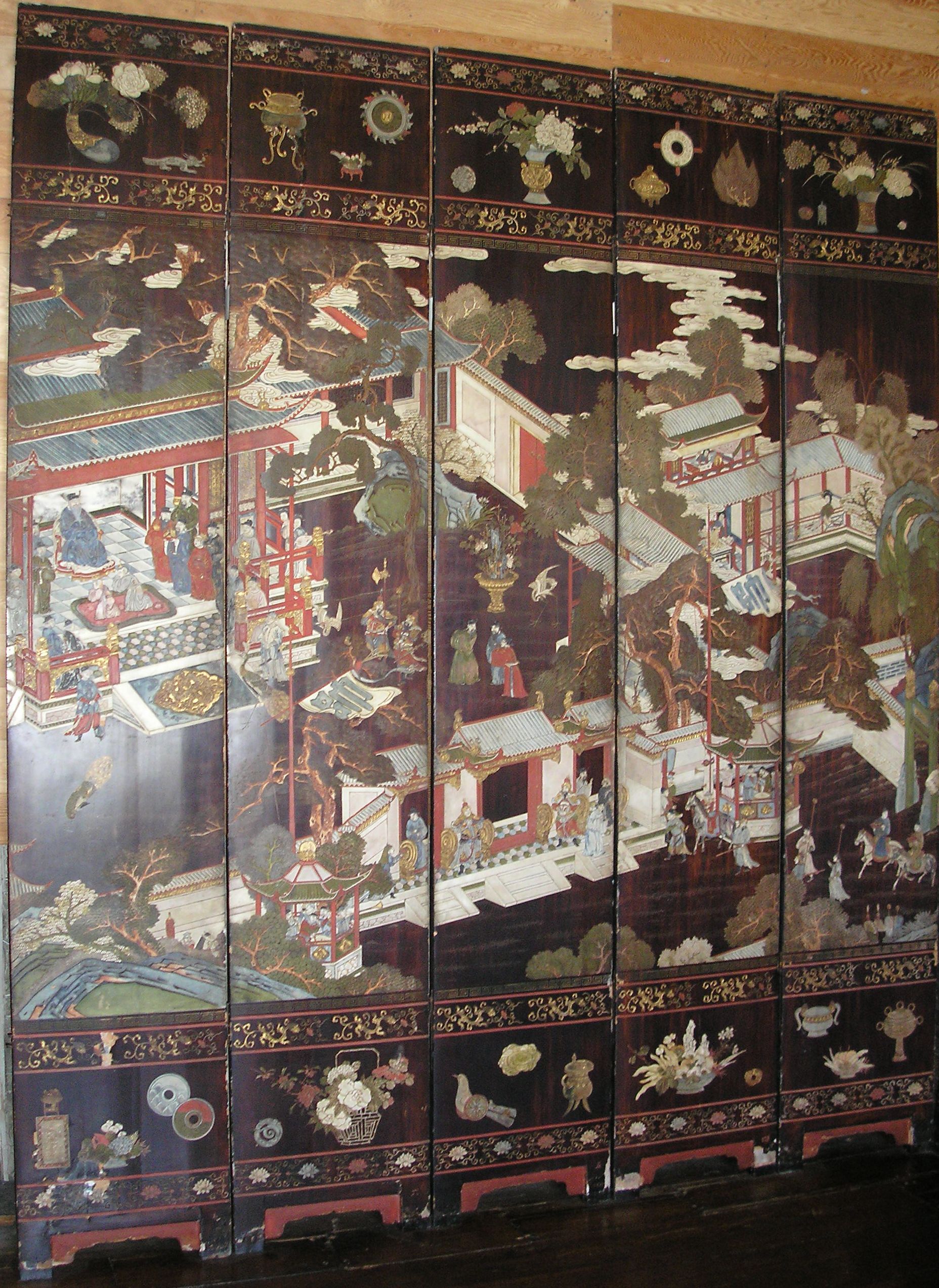
This screen is an unaltered example of what, in the late 17th century, would have been known as ‘Bantam work’ or ‘Coromandel lacquer’, from the Javanese port and Indian district through which they were imported from northern or central China.
The twelve leaves of this screen are joined by iron pin and staple hinges, numbered from left to right in Chinese characters. The front, surfaced with polished dark brown and black lacquer, is incised with a garden palace scene enhanced with soft distemper colours and gilt enrichment. The composition centres on a courtyard with a pavilion in which a dignitary sits receiving guests who carry gifts.
Ladies playing musical instruments occupy pavilions set amongst trees, while other buildings fly banners bearing the symbol of a general.. Panel ten illustrates a narrative scene from the Dream of Red Chambers, a famous Qing dynasty novel, a memorial to the women the author, Cao Zhan, had known. The border, which incorporates vases of flowers, utensils and traditional Taoist symbols, is guarded by an inner dragon pattern surround and an outer band of lotus motifs. Such screens were hugely expensive and were often cut up for wall panelling or made into furniture.
The screen was bought in 1940 by Philip Hendy, then Director of Leeds Art Galleries, for the exhibition Chinese Art at Temple Newsam House, with support from the LACF. (Gilbert, C., Furniture at Temple Newsam House and Lotherton Hall, Vol. II, 1978)
Linnell, William
1755 – 1760
top. H. 99; L. 170
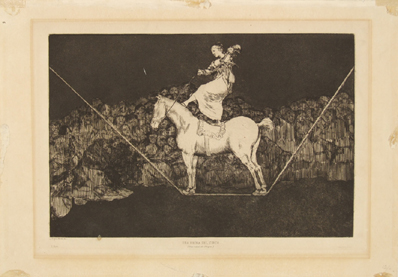
de Goya y Lucientes, Francisco
1877, Etching, aquatint and drypoint, 21.6 x 32.4

Sargent, Francis William
c. 1910, Sculpture: bronze, 31