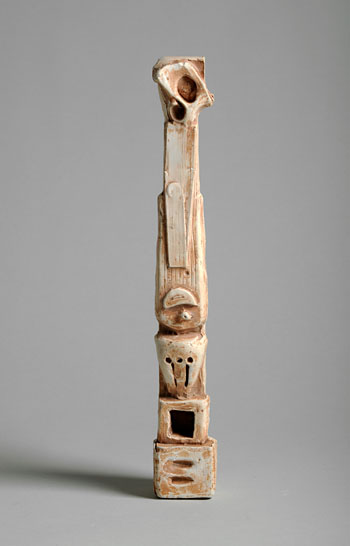
Moore, Henry, OM, CH
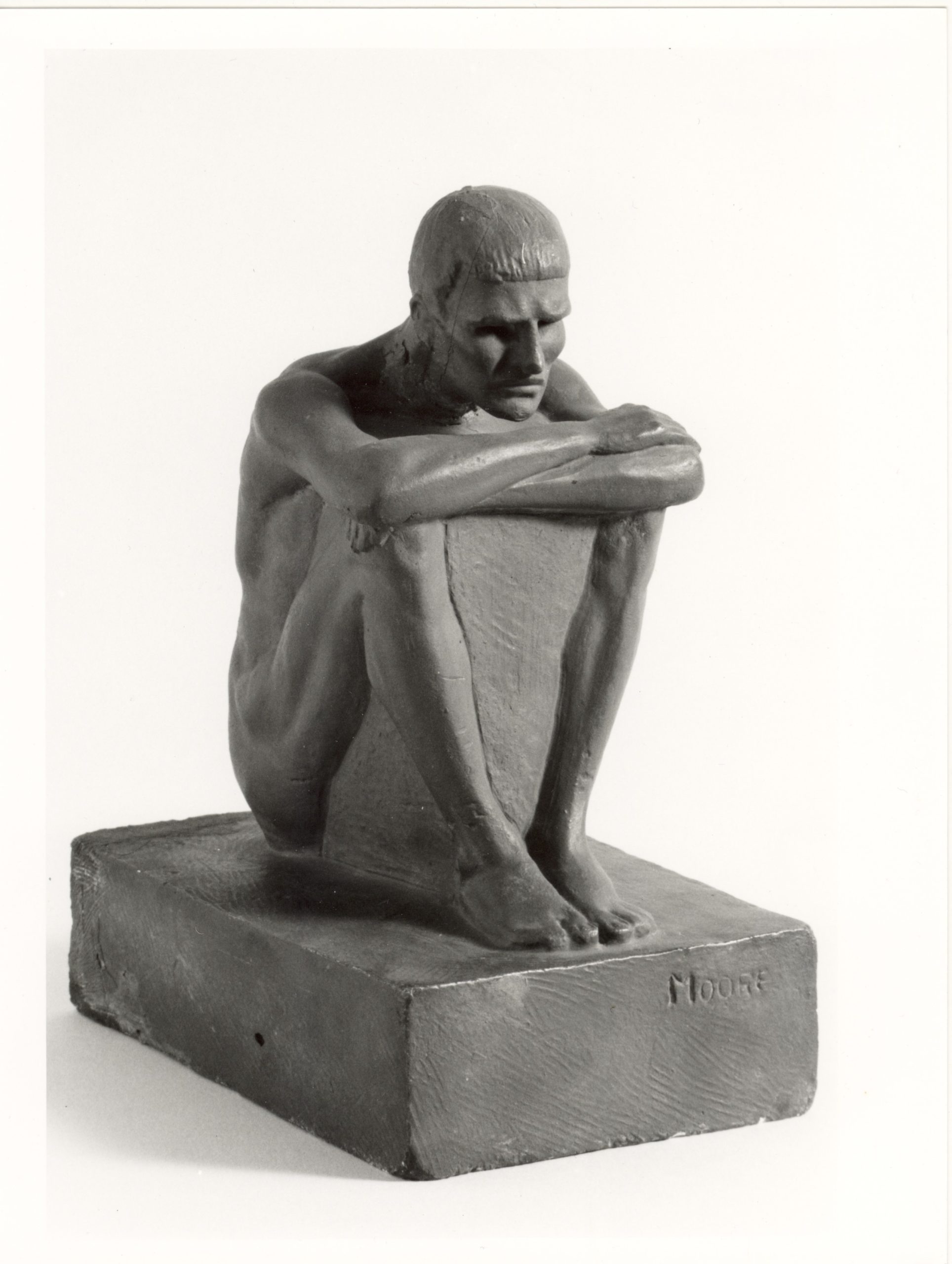
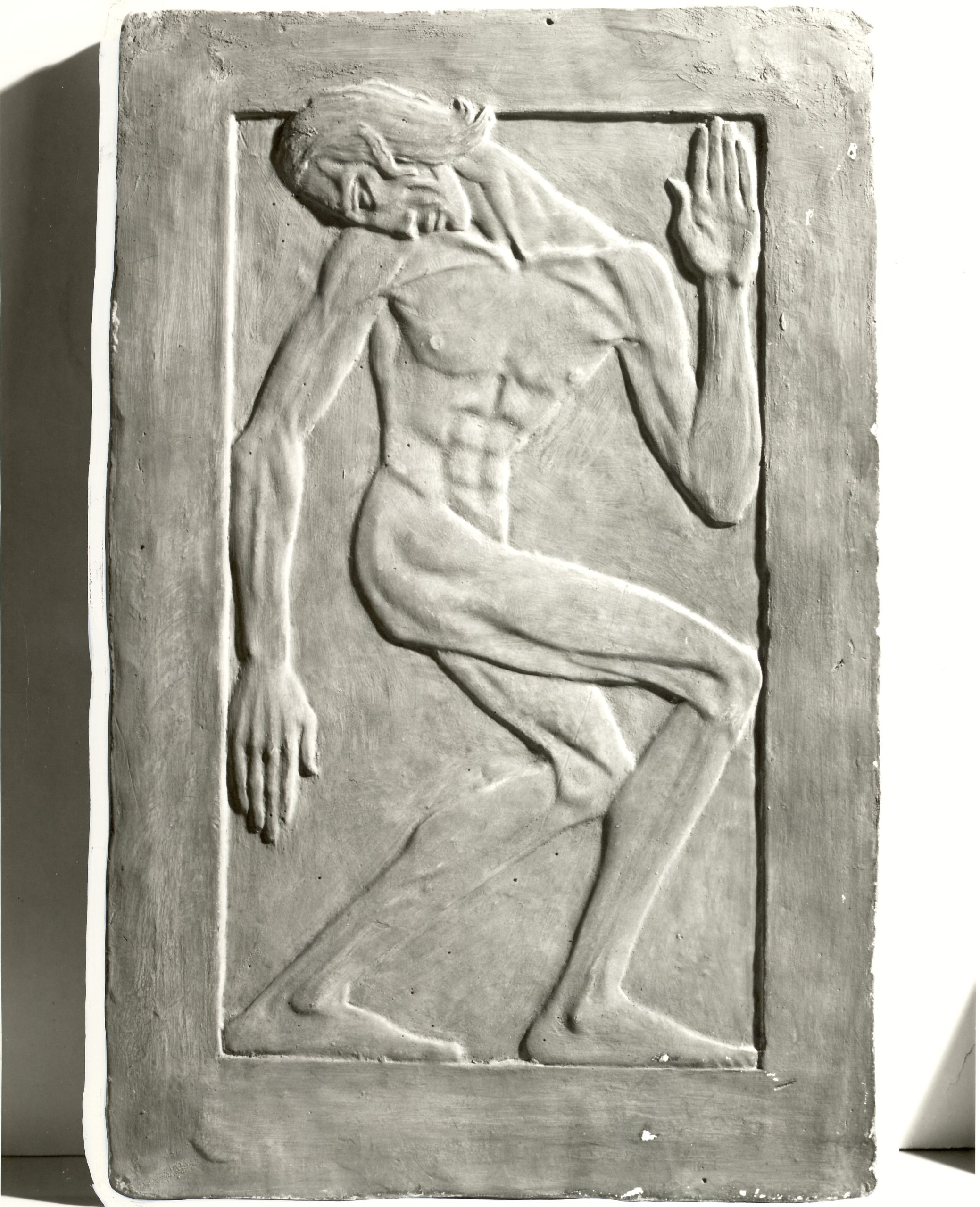
1954, Plaster, six upright 28; 2 panels 15 x 13
A sculptor and graphic artist born in Yorkshire and recognized world-wide as one of the greatest sculptors of the 20th century. Henry Moore was born in Castleford, the son of a coal miner. Following the wishes of his father, he trained and worked as a teacher. He enlisted in the British Army during the First World War and was gassed at the battle of Cambrai. After spending two months recovering in hospital, Moore returned briefly to teaching but an ex-serviceman’s grant made it possible for him to study at Leeds School of Art and from there he obtained a scholarship to the Royal College of Art (1919-23). He taught at the Royal College of Art from 1925-32 and at Chelsea School of Art from 1932-39. During the 1930s Moore lived in Hampstead, where he joined a small group of avante-garde artists, including Ben Nicholson and Barbara Hepworth and gained repute as an avante-garde sculptor. When his studio was bombed in 1940 he moved to Much Hadham in Hertfordshsire, where he lived for the rest of his life. The image shown is of one of the eight plaster maquettes Moore made for proposed stone sculptures for Marconi House, The Strand, London. They are dated 1954, but the project remained unrealised. Moore carried out many public commissions in Britain in the 1950s and during this time bronze replaced stone as his preferred medium. Moore often worked on a very large scale and, through the commissions he received for his monumental figures, became very wealthy. In 1977, Moore gave his estate at Perry Green to the trustees of the Henry Moore Foundation, which he established for education and promotion of the fine arts. The Henry Moore Institute, adjacent to the Leeds Art Gallery, was set up in partnership with the Leeds City Council as a centre for the study of sculpture in the city of Leeds. The eight maquettes were bought with the aid of a contribution from the LACF in 1989.